
Wind Turbine Cellular Systems
Prototype System

 Following on from the successful
proof of concept in Arizona a first
full prototype Wind Turbine Cellular System has been set up in UK. It uses a
commercial residential 3 blade wind turbine from https://istabreeze.us/ mounted on a pole overlooking test areas.
The actual wind turbine power generation of approximately 2KW is not used. Aim
to test that RF signals on a rotating wind turbine blade have better performance
than a static / fixed system through the RF coupling as will be used for trial
and production systems
Following on from the successful
proof of concept in Arizona a first
full prototype Wind Turbine Cellular System has been set up in UK. It uses a
commercial residential 3 blade wind turbine from https://istabreeze.us/ mounted on a pole overlooking test areas.
The actual wind turbine power generation of approximately 2KW is not used. Aim
to test that RF signals on a rotating wind turbine blade have better performance
than a static / fixed system through the RF coupling as will be used for trial
and production systems
Test
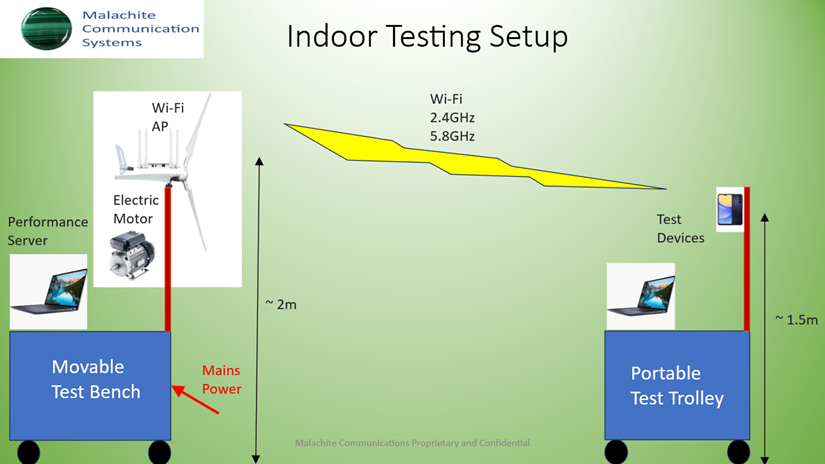
Setup
·
Active
antenna on 3 blades near tip, clear of main body so at > 1m
·
Blades
are not twisted or feathered as no pitch system
·
Wind
turbine mounted on a static pole about 2m above ground level to avoid local
clutter and mobile so it can be moved around
·
System
will only rotate statically on the pole to test effectively different wind
directions and speeds
·
System
to be tested:
a)
Initially
tested indoors but with reflections from walls and ceiling not so accurate
measurements but can prove the methodology
b)
Next
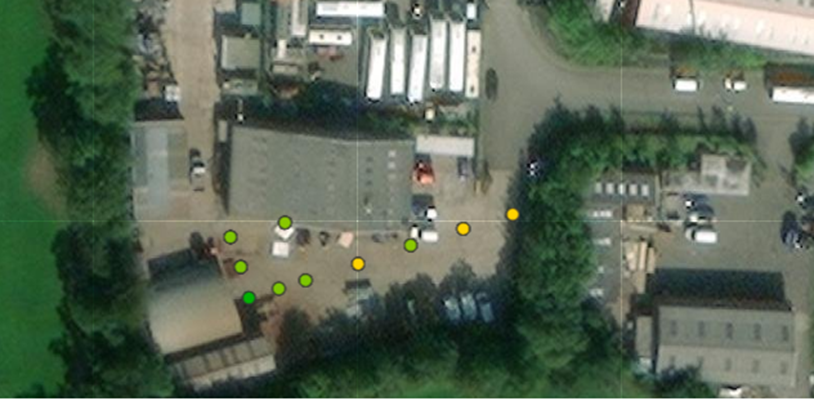
will be put in a doorway pointed out over a parking lot
c)
Finally,
setup might be mounted in the back of a pickup truck with a generator and then
tested in an open environment such as a field
·
As
no licensed cellular/mobile spectrum available for testing system operates on
Wi-Fi at 2.4GHz and 5.8GHz so representative of low powered mid-band cellular
coverage although Wi-Fi is less robust than 4G/5G which will perform much
better
·
Wi-Fi
access point is connected to a local performance server to eliminate backhaul
limitations and make for more reliable results, plus portable
·
Wi-Fi
bandwidth set at 20MHz using the cleanest channels available
Prototype System Testing Setup
Test Objectives
·
Performance
of RF coupling slip ring design
·
Coverage
on Wi-Fi at 2.4GHz and 5.8GHz
·
Throughput
downlink and uplink
·
Static
versus walking variations
·
Identify
if any coverage / system “holes”
·
Effects
of orientation and rotation speed
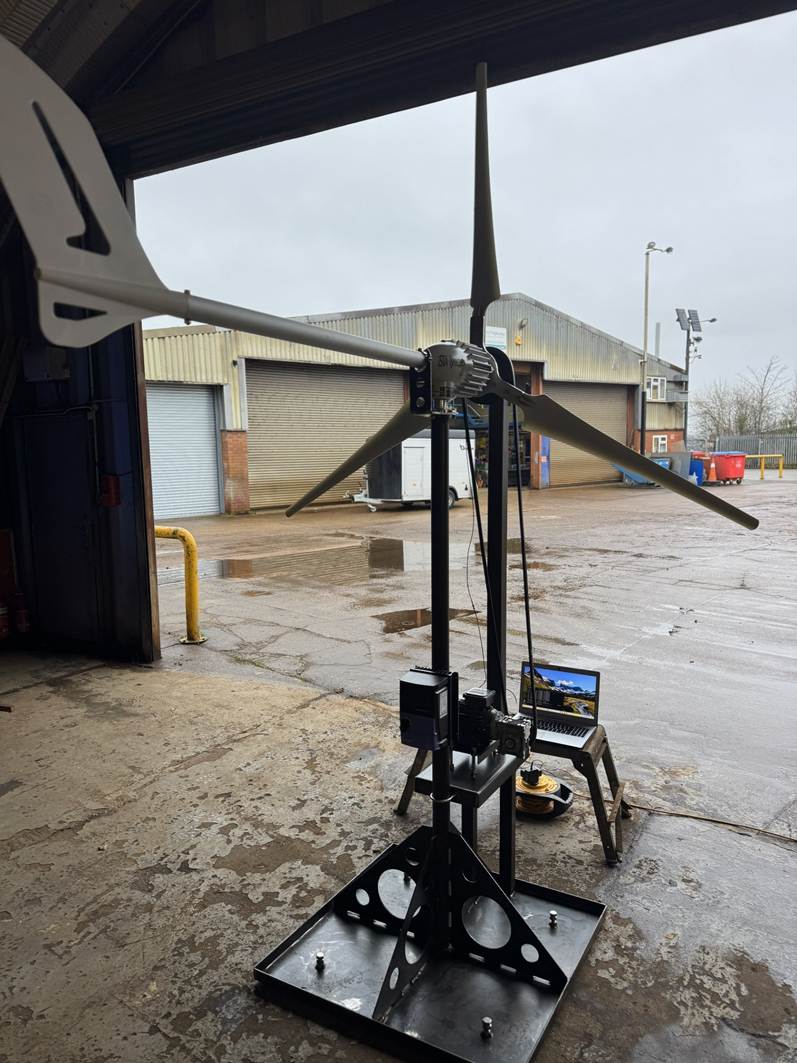
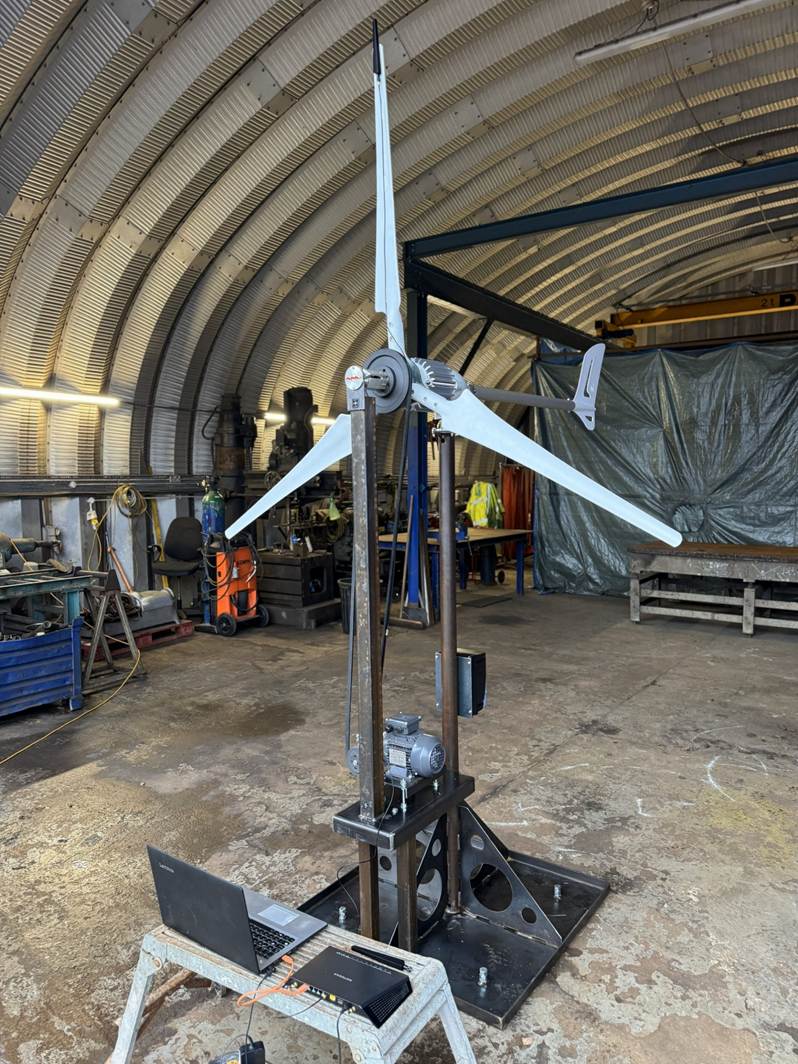
Test
Results
·
Initial
testing with 1, 2 and 3 antennas encouraging
·
Much
more full testing to do though
·
Some
refinement to design will probably be beneficial
Summary
TBD
Patents
pending - 63/651,895 and PCT/US25/30399
Patents
pending - 63/716,476 and 19/379,978
Based in
Arizona USA, for more information contact via
https://www.facebook.com/malachite.communication/